Lately, there’s been a lot of buzz around terms like Work IQ, Fabric IQ, and Foundry IQ. At first, it sounds like just another set of Microsoft buzzwords—but once you connect the dots, it actually tells a pretty interesting story about where things are going.
Here’s how I see it.
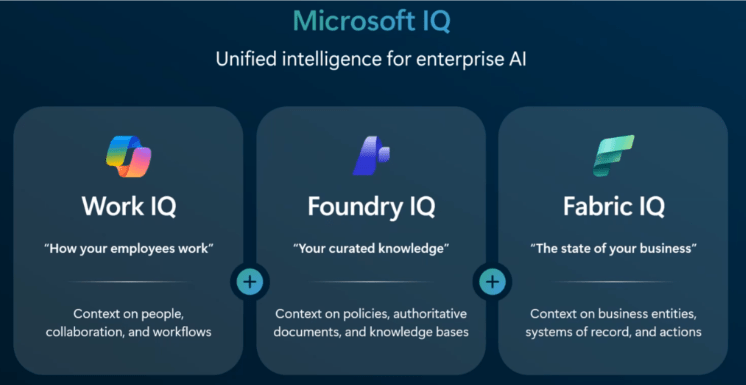
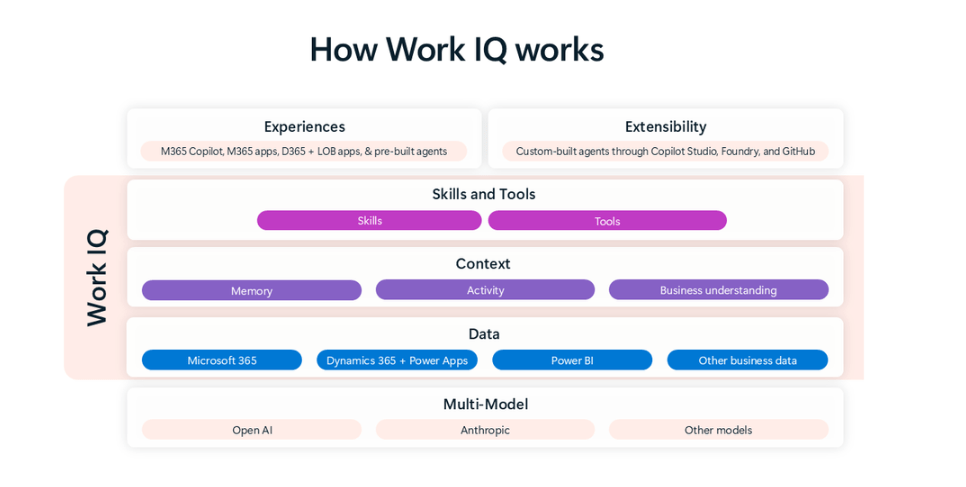
Work IQ – making everyday work a bit smarter
This is the part most people feel immediately.
It’s basically AI showing up inside the tools we already use—Outlook, Teams, Excel, Business Central. Not as something separate, but as something that just helps you get things done faster.
For example, instead of digging through reports or emails, you just ask:
“What’s pending? What needs attention?
And you get a straight answer.
It’s not about replacing work—it’s about removing the small friction we deal with every day.
Fabric IQ – finally making data usable
Most organizations already have data. The problem is—it’s scattered, delayed, or hard to trust.
That’s where Fabric comes in.
What I like about it is the idea of bringing everything into one place and actually making it usable in real time.
In a utilities scenario, think about:
- meter data coming in
- financial data in ERP
- operational data from different systems
Instead of looking at these separately, Fabric helps connect the dots.
So now you’re not just reporting—you’re actually understanding what’s happening.
Foundry IQ – building AI that fits your business
This is where things get more hands-on.
Foundry isn’t just about using AI—it’s about building something that works for your processes.
You can take real inputs—calls, documents, transactions—and pass them through AI to:
- summarize
- detect patterns
- suggest next steps
It’s powerful, but also where a lot of experimentation is happening right now.
How I think about all three together
If I simplify it:
- Fabric IQ → gets your data in shape
- Foundry IQ → adds intelligence on top of it
- Work IQ → puts that intelligence in front of users
That’s the flow.
And honestly, that’s what’s changing—
we’re moving from systems that store data → to systems that actually guide decisions.
 Dynamics Decoded
Leave a comment