When I first heard the term Artificial Intelligence years ago, I pictured sci-fi movie robots and futuristic tech that felt light-years away. Fast forward to today, and I’m working with AI almost daily — not in a lab coat, but in real-world projects where it’s quietly reshaping how businesses operate.
At its core, AI is about giving software the ability to mimic human-like behavior. Over the years, the definition has evolved, but in today’s landscape, most AI solutions are powered by machine learning models that learn from enormous amounts of data. This allows applications to interpret input (text, voice, or images), reason over it, and generate smart, context-aware responses or predictions.
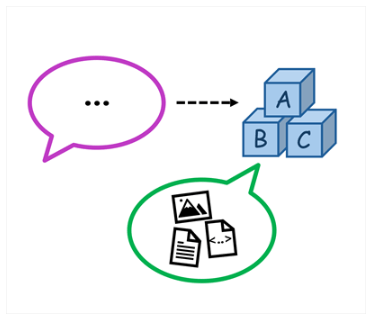
The Capabilities That Still Amaze Me
Working with Azure AI Foundry, I’ve had the chance to experiment with and integrate AI features into real solutions — from customer service agents to RFP automation. Here are a few that stand out:
- Generative AI – The creative powerhouse. In one project, I built a generative AI component to draft property descriptions and proposal content automatically. With Azure AI Foundry, connecting these capabilities to our product database was surprisingly seamless.
- Agents – These aren’t just chatbots; they’re autonomous helpers. Using Azure AI Foundry’s agent orchestration, I built an “executive assistant” that could read a meeting invite, fetch the location, share a map, and even trigger a ride booking workflow — without manual intervention.
- Computer Vision – AI that can “see” and understand images. I’ve worked on proof-of-concepts where computer vision identified products from camera feeds, removing the need for barcode scanning entirely.
- Speech – From voice-to-text for meeting notes to spoken responses for customer interactions, integrating speech services via Azure AI Foundry has made conversational experiences feel natural.
- Natural Language Processing (NLP) – The magic behind understanding text. I’ve used it to scan thousands of social media mentions, categorize sentiment, and even translate feedback — all in near real time.
- Information Extraction – I’ve seen this save hours of manual work. For one automation project, we pulled purchase details from scanned receipts and invoices using Foundry’s vision + NLP combo.
- Decision Support – Predicting trends based on data patterns. One client project involved forecasting utility consumption spikes based on weather and demographic data — invaluable for operational planning.
Why Generative AI Feels Different
Generative AI has been the real game-changer for me. In Azure AI Foundry, I can work with large language models (LLMs) for broad, creative problem solving or small language models (SLMs) for faster, specialized use cases.
What excites me most is how Foundry makes it easy to connect these models directly to enterprise data — so instead of just giving “generic AI answers,” the model can answer with context from your business. And now with multi-modal models, we can feed in not just text but images, audio, and more, and get back rich, actionable outputs.
From Technology to Real Impact
For me, AI isn’t just about automation; it’s about amplification — helping people work smarter, not just faster. With Azure AI Foundry, I’ve been able to take AI from being “cool technology” to being a practical partner for everyday business processes.
The real joy comes when I see a customer’s face light up because an AI agent saved them hours of work, spotted an insight they’d missed, or simply made a frustrating process painless. That’s when I’m reminded — AI isn’t replacing us, it’s empowering us.
 Dynamics Decoded
Leave a comment